
Two Decades in the Making
Updated: Mar 26
In 2007 I was living at Cornerstone, a Housing Co-operative for activists and people who want to change the world. Our house signed up for the Short Stop scheme, hosting destitute asylum seekers for a few nights at a time. Our guests were people of all ages, genders and situations who had risked everything to come over to England in search of sanctuary. Some people opened up about where they had come from, with harrowing tales of persecution and violence. Others were more reserved. Every one of them was polite, thoughtful and gracious, even though they were all suffering the immense burden of being alone in a strange, cold, wet country, where their data was collected but no help offered. They were told they would have to wait for their claims to be processed – no indication of when – and turned out onto the streets to fend for themselves. They had to sign in at the Immigrations Reporting Centre every week, where there was always the chance they would be seized and taken off to a detention centre or deported.
As a person who has had the privilege of safety and security in my home country, and on top of that the freedom to travel and be welcomed in foreign lands, I found the situation the asylum seekers were in shocking and unfair. I became involved with a group called No Borders, which campaigned for the rights of migrants. No Borders had set up a camp in Calais, where they were delivering humanitarian aid to the migrants who had made their way from war-torn countries to seek refuge in the Commonwealth. England, the land of dreams, whose language had been drummed into their heads alongside their mother tongues; the motherland, from whom independence was often within living history. “When I get there, I will have a home, a job, a wife…” said a young Sudanese man wistfully, holding onto the vision that kept him going through the hungry days and freezing nights by the truck stops.
I was doing a massage course at the time, and was eager to use my new skills to help people. Someone fashioned me a sort of cubicle by stretching sheets between tents, and from here I offered massages to people who were coming to see the counsellors and first aiders. As word got round, people started to bring friends who had injured themselves or were in pain, and I was soon overwhelmed with people who needed healing. I did my best with what I had, but I knew I needed to do more.
Back home in England I finished my diploma and took a course in Clinical and Remedial Massage Therapy. I offered massage to everyone I came across - neighbours, shop keepers, anyone who showed any sign of being in pain. I started to research how I could offer massage therapy to asylum seekers and refugees here in the UK. I volunteered at the drop-ins run by PAFRAS, in a small back room, but it was not very conducive to safe space or relaxation. I went to the business advice centre that used to be on Chapeltown Road and asked them how I could access funding to rent a space and get the equipment and so on. There was an advisor there, Karim, who is sadly no longer with us. Karim did a lot for local people setting up in business. He told me I needed to start a Community Interest Company, and coached me through the early stages.
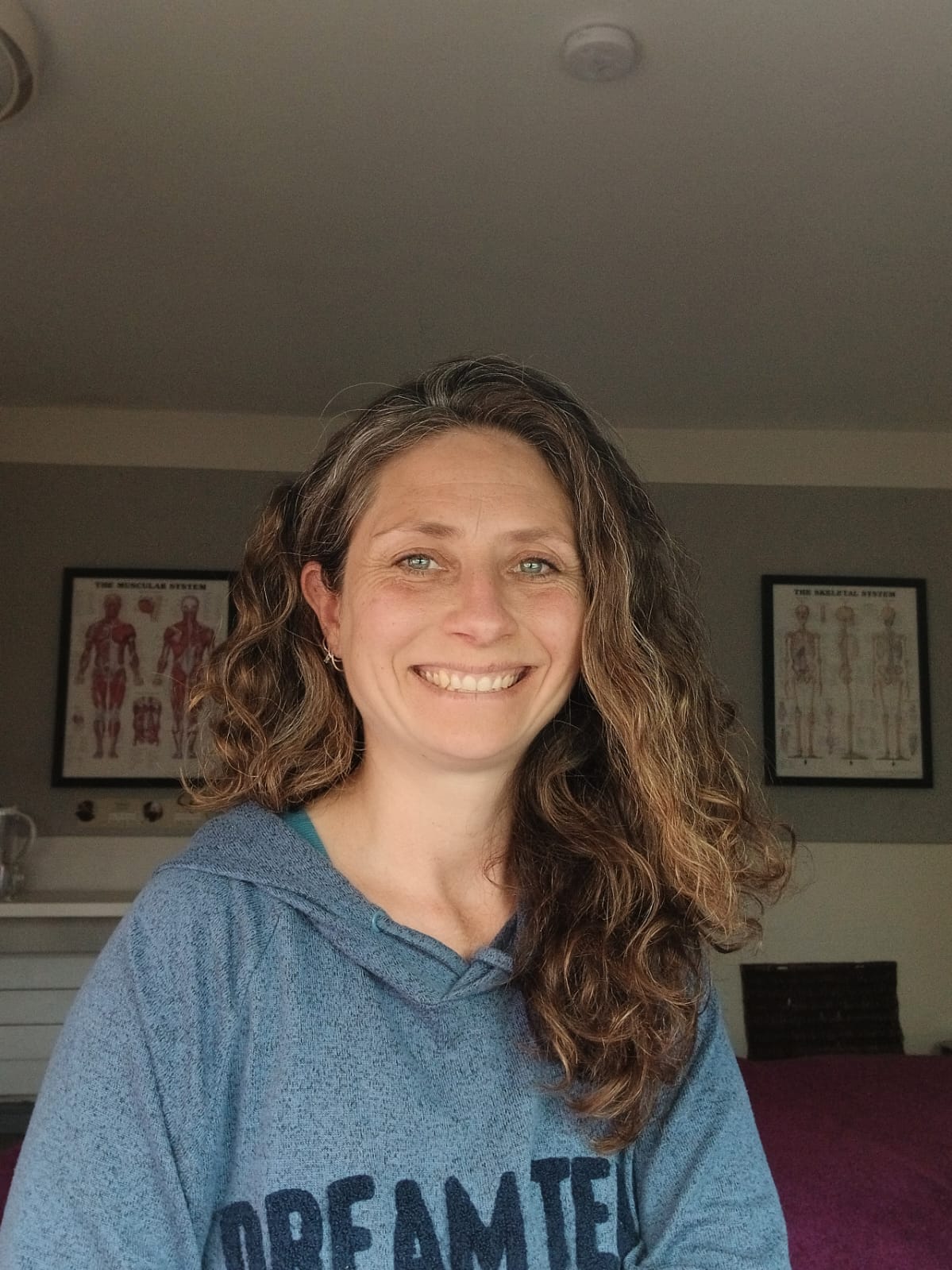
It was about this time that I met Laura Kay, a recent Massage graduate of Thomas Danby College. Laura had an amazing spirit and was excited by the work I was doing. She said she wanted to join me, and when we put our heads together In Touch began to take shape. We started doing community events, including Chapeltown Market, where we had a stall. We attracted a community of colourful and interesting therapists and started to work as a collective. We had a couple of good years together before I went off traveling and Laura took over to guide In Touch through its next phase. She worked tirelessly to acquire funding and run a volunteers’ programme, helping hundreds of asylum seekers cope with the difficulties of their situations. In 2017, I returned from my travels just as Laura was going off to start a new life and a family. She left us with a grant from The National Lottery, to provide 240 free treatments in the community. It was a real breakthrough for In Touch, and we were able to work alongside the new social prescribing service Connect Well, to reach people who really needed it. On the back of that, we set up a treatment space at St Martin’s GP surgery, and were finally able to support the public in a healthcare setting.
But it was not to be. Covid-19 hit the massage world hard, and over those years we very nearly closed down altogether. Then, in 2022, I realised that people needed contact more than ever, and decided to give it another go. And here in 2026, we are doing just that.
Our little social enterprise has taken many different shapes and forms. We have worked alongside so many wonderful people, helping each other out on our various missions and ambitions. It has never ceased to be a struggle, but it has always been worth it, because keeping in touch, with ourselves and with each other, feels good.

Comments